





Root Canal Treatment in Greensboro
Root Canal Process | Root Canal Safety | Patient Reviews
What is a root canal?
A root canal is one of the most common dental procedures performed, well over 14 million every year. This simple treatment can save your natural teeth and prevent the need for dental implants or bridges.
At the center of your tooth is the pulp. Pulp is a collection of blood vessels that helps to build the surrounding tooth. Infection of the pulp can be caused by trauma to the tooth, deep decay, cracks and chips, or repeated dental procedures. Symptoms of the infection can be identified as visible injury or swelling of the tooth, sensitivity to temperature, or pain in the tooth and gums.
Don’t Suffer From Tooth Pain Any Longer!
Pain in your tooth or gums may be a symptom of infected pulp. Piedmont Endodontics can perform a Root Canals to treat the infected pulp, relieve pain, and save your natural teeth!
If you experience any of these symptoms, your dentist will most likely recommend non-surgical treatment to eliminate the diseased pulp. This injured pulp is removed and the root canal system is thoroughly cleaned and sealed. Root canal therapy usually involves local anesthesia and may be completed in one or more visits depending on the treatment required. Success for this type of treatment occurs in about 90% of cases. If your tooth is not amenable to endodontic treatment or the chance of success is unfavorable, you will be informed at the time of consultation or when a complication becomes evident during or after treatment.
Baird, Horwitz, Morrow, Schweizer, Grine, Hagood and Egan use local anesthesia to eliminate discomfort. In addition, we will provide nitrous oxide analgesia, if indicated. You will be able to drive home after your treatment, and you probably will be comfortable returning to your normal routine.
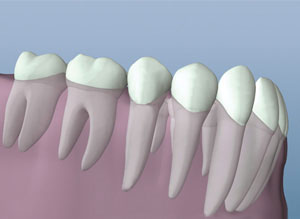
Healthy Tooth
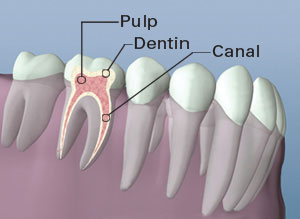
Tooth Anatomy
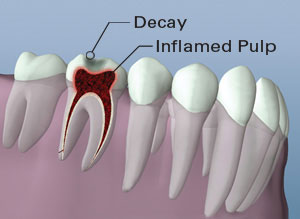
Inflammation
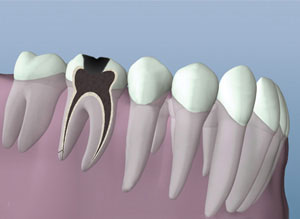
Cleaned Canals
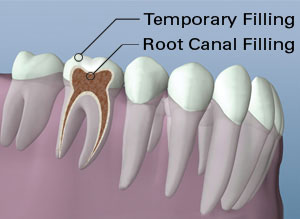
Filling Placed
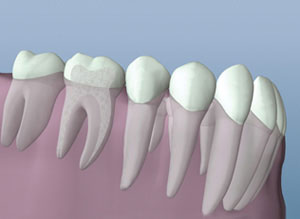
Healed Tooth
What happens after treatment?
When your root canal therapy has been completed, a record of your treatment will be sent to your restorative dentist. You should contact their office for a follow-up restoration within a few weeks of completion at our office. Your restorative dentist will decide on what type of restoration is necessary to protect your tooth. It is rare for endodontic patients to experience complications after routine endodontic treatment or microsurgery. If a problem does occur, however, we are available at all times to respond. To prevent further decay, continue to practice good dental hygiene.

How much will a root canal cost?
The cost associated with root canals can vary depending on factors such as the severity of damage to the affected tooth and which tooth is affected. In general, endodontic treatment is much less expensive than tooth removal and replacement with an artificial tooth.
Root Canal Safety

The Importance of Endodontics in Overall Health
The connection between oral health and overall well-being is clear—and endodontics plays a crucial role. By treating infection, relieving pain, and preserving natural teeth, endodontic treatment helps maintain both oral and systemic health.
Patients often have concerns about root canal safety, and it’s essential for dentists to address these with facts and reassurance. The American Association of Endodontists (AAE) offers trusted, up-to-date information on the safety and success of endodontic procedures.
Despite decades of research disproving it, the outdated “focal infection theory” still surfaces. Introduced by Dr. Weston A. Price in the 1920s, this theory claimed root canal-treated teeth could cause systemic disease. His flawed research led to widespread, unnecessary tooth extractions.
By the 1930s, better-designed studies refuted Price’s findings. In 1951, the Journal of the American Dental Association thoroughly debunked the theory, highlighting the lack of proper scientific methods in his work.
Since then, ongoing research—including major updates from the American Heart Association—has consistently confirmed the safety of endodontic treatment. There is no valid scientific evidence linking root canal-treated teeth to systemic illness.
Dentists should be ready to counter lingering myths with empathy and evidence. Preserving natural teeth through endodontic care remains a safe, effective, and health-conscious choice.

Dentists are asked to use the following guidelines to address patients who inquire about a connection between root canal treatment and illness:
- Acknowledge the patient’s concerns; stress that optimum health is the goal for every dental patient.
- Provide the patient with written information about endodontic treatment, and discuss it. The AAE has a variety of patient education brochures available for purchase (www.aae.org/onlinestore).
- Provide the patient with information from the AAE website about common root canal myths:
www.aae.org/patients/treatments-and-procedures/root-canals/myths-about-root-canals-and-root-canal-pain.aspx#2. - Indicate that the patient is in control of his/her own decision to move forward with any dental procedure, and reiterate a commitment to the highest quality dental care.
Are You Ready to Find the Relief You Deserve?
Contact us with any questions or to schedule an appointment to reclaim your smile today!
Contact Us Today To Learn More About Root Canal Therapy
For more information about Root Canal Therapy, please don’t hesitate to send us a message or call one of our convenient locations:
- Greensboro: Greensboro Office Phone Number 336-288-0010
- High Point: High Point Office Phone Number 336-889-5656
- Winston-Salem: Winston-Salem Office Phone Number 336-365-2246
- Asheboro: Asheboro Office Phone Number 336-629-1444
- Kernersville: Kernersville Office Phone Number 336-423-5075
Piedmont Endodontics
Patient Review by Tina B
Very informative cares about their patients I experienced no pain whatsoever
- Tina B
Patient Review by mary w
I had the good fortune of meeting Dr. Baird, and have gotten to know his beautiful family, as his son and my grandson play football together. I recently asked Dr. Baird about an implant that I have needed for years at a football practice, not realizing then that in a few weeks I would be at my general dentist in Winston Salem with a hugh toothache in a tooth under my crown next to the space where the implant was needed. Your practice was highly recoommended by Dr. Ted Clark in Winston, as well as other dentists whom I know. I was so glad to see Dr. Baird was part of the practice, and was able to get an appointment almost immediately. I was blown away at the kindness, efficiency, and amazing expertise he performed in doing the root canal. And he was able to save the crown!!!!! I'm not even sure that i'm supposed to tell you about how generous he was in re to the cost of the procedure. It was na Blessing from God. So, I will be singing his praises for a long time, as well as realizing that we have such a great practice in this community to be so thankful for. I'm living proof that there are lots worse things than a root canal!! Just sooooo thankful for the treatment I received Friday, November 4th. God Bless Your Practice. Mary Lewis
- mary w